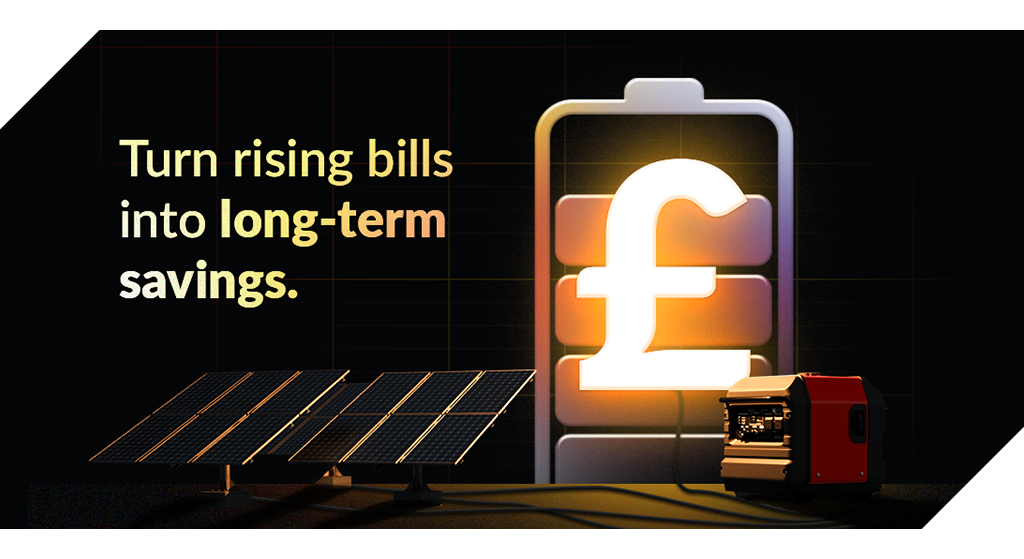
Can’t get connected to mains electricity? Quoted thousands to upgrade grid capacity? Or maybe your business keeps losing power whenever the grid goes down. For many homes, farms and estates, rising bills and standing charges are another constant frustration.
That’s why more people are turning to off-grid power systems, producing their own electricity with a mix of solar, batteries and backup generation. But how much does an off-grid power system actually cost?
The answer depends on your site, your energy needs and how you want your system to work. Below, we break down the key cost factors, the savings compared to grid electricity and what to consider when weighing up the investment in an independent power supply.
The true cost of grid power vs going off-grid
When you’re weighing up energy options, it’s not just about what you pay today. It’s about what you’ll be paying (and dealing with) for years to come. Here’s how on grid and off-grid power compare:
Staying on the grid
- Connection costs: For remote plots, new connections can range from tens to hundreds of thousands of pounds once cabling, poles, transformers and wayleaves are included. In our experience, the average connection cost is around £70,000.
- Ongoing bills: You’ll pay unit rates and standing charges and remain exposed to price rises. With current average standing charges around 60p per day and having risen roughly 10% per year over the past decade. That’s nearly £24,000 over 25 years just to stay connected, before using any electricity. You’ll pay unit rates and standing charges and remain exposed to price rises.
- Hidden costs: Outages cause downtime, disruption and sometimes spoilage or equipment issues.
Going off-grid
- Upfront investment: You buy your own ‘mini power station’ – generation (often solar + backup generator), battery storage and intelligent control.
- Ongoing savings: For full off-grid, no electricity bills or standing charges. Fuel is only for short generator top-ups in a correctly designed hybrid system.
- Stability: You’re insulated from future price hikes and grid constraints.
Bottom line: Grid = lower upfront (if already connected) but forever bills. Off-grid = higher upfront, far lower ongoing costs, coupled with ongoing price and power certainty. Once installed, solar energy generation costs are effectively zero thereby protecting you against inflation and future electricity price rises.
Off-grid system costs: cost breakdown
When you invest in an off-grid system, you’re not just buying a box of parts. You’re building your own reliable power station. One that is tailored to your site, your energy needs and your long-term goals.
Here’s some components that might be considered as part of your bespoke off-grid system:
Solar array
Often the backbone of the system. Panels, mounting (roof or ground) and wiring. More solar capacity means less generator runtime and lower lifetime fuel costs.
Battery bank
The single biggest cost driver. Batteries store the solar energy you’ll use at night or during poor weather. Options include:
- Lead-acid: Powerguard’s preferred choice proven, robust and highly reliable. These batteries have decades of real-world testing, perform well in both hot and cold conditions and offer excellent safety. They’re also more cost-effective and easier to service over time.
- Lithium: Available on request. Higher upfront cost but longer lifespan and lower maintenance when managed correctly.
Inverter & intelligent controls
The brains of the system. Converts DC to AC, manages charge and discharge, protects batteries and automatically starts the generator when needed. Higher-quality controls boost reliability and efficiency.
Powerguard’s own PS system has been developed and refined over 26 years to deliver maximum performance and reliability. Designed and built in the UK, it takes the highest possible yield from solar and battery inputs, minimises generator runtime and extends the life of both batteries and solar components.
Backup generator
Handles peak loads and long grey spells. Specification is critical an energy-efficient, sustainable and quiet generator keeps running costs low.
Powerguard systems use high-quality generators built around a 1500 RPM Perkins engine and Mecc Alte alternator, delivering proven reliability, fuel efficiency and long service life.
Site & installation
Access, terrain, cable runs, enclosures and local works all influence labour and balance-of-system costs.
Quality & customisation
No two sites are the same. A bespoke design may cost more upfront than an off-the-shelf kit, but it avoids oversizing, reduces waste and delivers greater reliability – saving more money over time.
Ongoing costs & maintenance
Every power system has upkeep. The difference with a well-designed off-grid setup is that it’s predictable, controlled and far lower than relying on the grid or running a generator 24/7.
- Fuel: A backup generator only runs when solar and storage need topping up – short, concentrated cycles rather than constant operation.
- Servicing: Like any engine, a generator benefits from routine servicing. Panels just need the occasional clean and most customers choose a simple maintenance plan for peace of mind.
- Monitoring & support: Intelligent controls and remote diagnostics mean issues are spotted early, avoiding unexpected downtime or costly callouts.
With Powerguard systems, these modest costs are offset by the savings you make every month: no standing charges, no price hikes and no dependence on fragile grid supply.
When does going off-grid save you money?
Going off-grid goes beyond cutting bills. Although that is pretty favourable. It is also about removing costs you don’t control and replacing them with a system that pays you back in stability, resilience and independence.
- Avoiding grid connection fees: New connections or supply upgrades often cost tens of thousands. Off-grid eliminates that expense completely.
- Budget certainty: With your own system, you’re insulated from unit price hikes, standing charges and unpredictable bills. You’re effectively pre-paying for decades of secure electricity.
- Resilience that protects income: No more downtime, spoilage or operational disruption when the grid fails – your system keeps running.
- Energy independence: You control your supply, with no reliance on DNOs or hidden charges.
- Sustainability built in: Solar can provide the bulk of your energy, with a generator running only when needed. That slashes fuel use and emissions.
- Scalability on your terms: As your site, business or home grows, you expand your system. Not your standing charges.
In short: Off-grid power saves money both directly and indirectly while giving you reliability the grid can’t guarantee. According to UK Government data, electricity prices have risen by an average of around 10% per year for more than a decade and show no sign of slowing. As a result, well-designed off-grid systems can save hundreds of thousands of pounds in energy costs over their lifetime.
Real-world examples: off-grid in action
At Powerguard, every off-grid system we build is designed, manufactured and supported here in the UK. With 25+ years of engineering expertise, we’ve delivered solutions for farms, estates, businesses and rural homes across the country.
Here are a few real-world examples of how going off-grid saves money, cuts diesel and delivers true energy independence:
Storage site savings
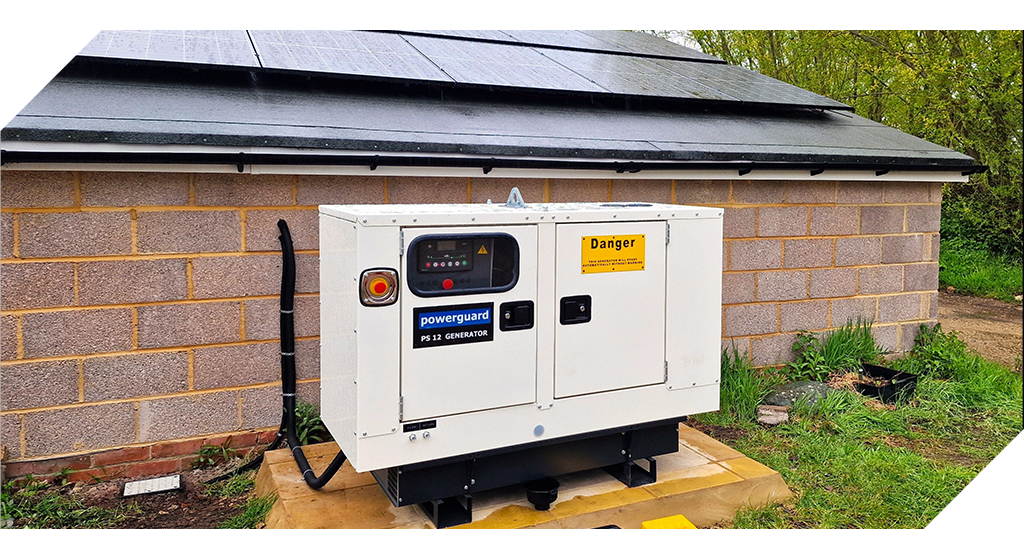
A Sussex facility cut diesel use by ~80% with solar + storage, saving ~£5,000/year.
Read the Jill Carragan case study
Rural barn conversion
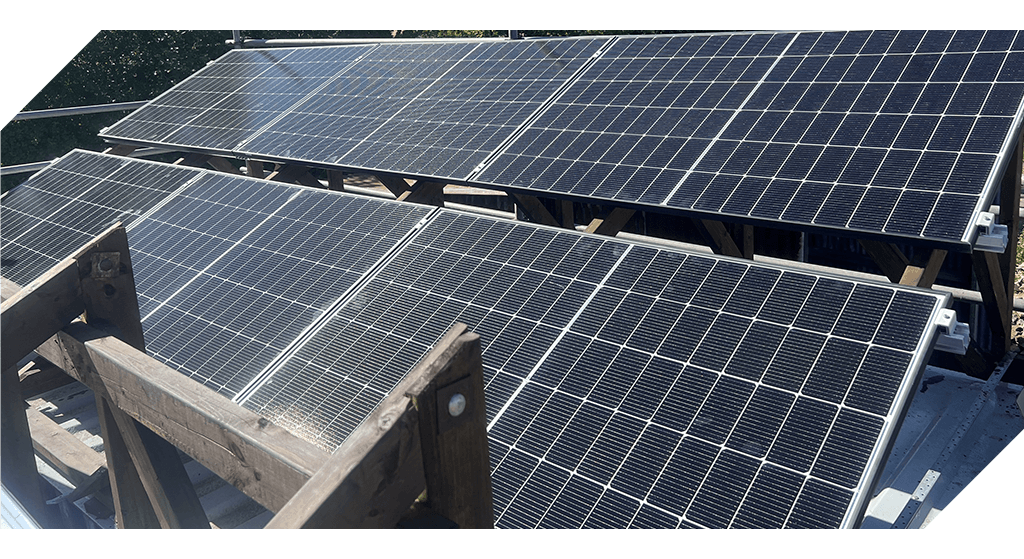
A Norfolk home avoided a costly mains extension by installing a solar-battery hybrid. Now runs independently with minimal generator time.
Estate power upgrade
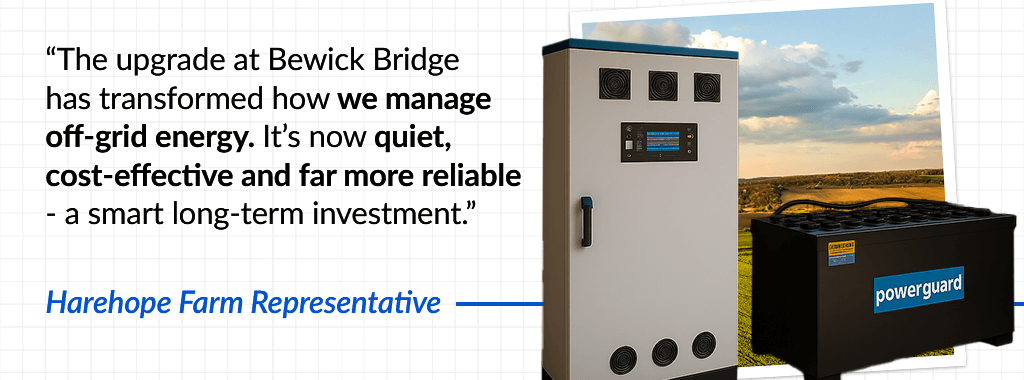
At Bewick Bridge, a failed system was replaced with solar, battery storage and a modern generator. Fuel use dropped by over 70%, noise and emissions fell sharply and energy independence was restored.
Read the Bewick Bridge case study
FAQs: your questions about going off-grid, answered
Thinking about leaving the grid raises a lot of practical questions, from cost to reliability. That’s normal. Every site is different and we know the decision isn’t made lightly. To help, here are answers to some of the most common queries we hear from people weighing up grid power vs. going off-grid.
Still got a question? We’ve got an answer. Contact the Powerguard team and we’ll be happy to advise.
Is off-grid cheaper than connecting to the grid?
Do I still need a generator?
How long is the payback period?
What about maintenance?
Can you integrate what I already have?
Is off-grid power reliable in winter?
Can I run a business off-grid?
Your next step: get numbers that fit your site
There’s no universal price for an off-grid system because there’s no universal site, load profile or goal. The smartest way to understand cost is a tailored assessment:
- We’ll review your usage
- Assess your site
- Design a right-sized system
- Provide a clear breakdown and timeline
Ready to see what off-grid can do for you?
Call 01507 600 688
Email sales@powerguard.co.uk
Or, fill in the form below to request your FREE bespoke quote.
Recent posts
- How Much Does an Off-Grid Power System Really Cost?
- Legacy Central Battery Systems: When to Upgrade Your Emergency Lighting Power
- Inside Powerguard: 25+ Years of British Engineering Power Systems
- Emergency Backup Power for Businesses: What Are Your Options?
- How To Get Reliable Power At My Wedding Venue